


Metal Mesh
Why Choose Us?
Complete Qualifications
The company has now developed into a high-tech enterprise with complete products, excellent quality, large scale and strong production capacity in the same industry. The company has made more than 100 scientific and technological innovation achievements and obtained 28 national patents.
Grouped Equipment
The supporting equipment includes automatic production line of anchor rod, automatic shearing production line of anchor rod, pallet production line, anchor cable production line, W guard plate production line and other production and processing equipment.
Wide Range of Applications
The company's products cover dozens of kinds of mining lamps, concrete-filled steel tubular supports, production and processing equipment for support products, anchor rods, anchor cables, anchoring agents, various metal meshes, hose assemblies, steel ladders, steel belts, etc.
Professional Service
The company pays attention to after-sales service, has a perfect after-sales service system and a strong technical support team, to provide customers with all-round, efficient and timely after-sales service. The company's after-sales service scope includes product installation, commissioning, training, repair, maintenance and other links to ensure that customers can get high-quality after-sales service and support.
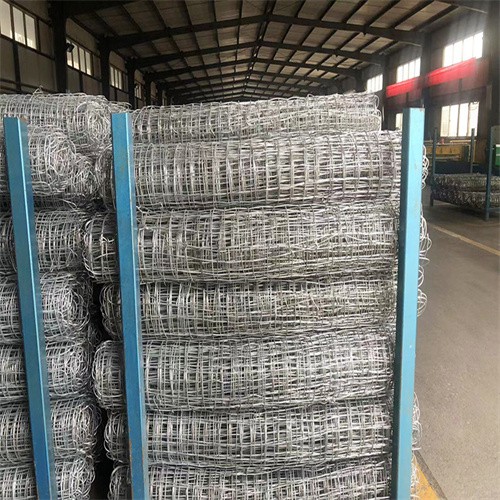
Also referred to as wire fabric, wire cloth, or hardware mesh, metal mesh is a material that has a wide variety of uses. As the name suggests, it's created by weaving or welding wire into a screen-like product. Metal mesh is used in many areas. For example construction, furniture, transportation. But the most important and priority place of use is the construction sector. The woven construction type is more flexible, easier to shape, and is available in smaller openings. Whereas welded construction provides a flatter, cleaner appearance that maintains its shape and integrity when cut. The size and number of the openings will often dictate their intended and applicable uses. In filtration or mining settings, metal meshwith smaller openings allows only the smallest substances, such as water or fine minerals, to pass through the metal. On the other hand, larger openings in infill panels for railings can allow light and air to pass through, while also providing safety.
-
![Mine Diamond Mesh]() Mine Diamond MeshMine Diamond Mesh is a type of mesh with diamond shaped holes, and its production is mainly completed through crochet technology, which is relatively simple. It has a variety of materials,...read more
Mine Diamond MeshMine Diamond Mesh is a type of mesh with diamond shaped holes, and its production is mainly completed through crochet technology, which is relatively simple. It has a variety of materials,...read more -
![Steel Bar Welding Net For Mine]() Steel Bar Welding Net For MineDue to its high strength, corrosion resistance, easy installation, and economy, the welded steel mesh for mining is widely used in multiple occasions. The following is a summary of its main...read more
Steel Bar Welding Net For MineDue to its high strength, corrosion resistance, easy installation, and economy, the welded steel mesh for mining is widely used in multiple occasions. The following is a summary of its main...read more -
![Mine Steel Welding Mesh]() Mine Steel Welding MeshWelded steel mesh for mining is an important engineering material widely used in various fields such as coal mines, construction, transportation, and agriculture. The following is a detailed...read more
Mine Steel Welding MeshWelded steel mesh for mining is an important engineering material widely used in various fields such as coal mines, construction, transportation, and agriculture. The following is a detailed...read more -
![Mine Steel Bar Welding Net]() Mine Steel Bar Welding NetAlthough welded steel mesh for mining has many advantages such as high strength, corrosion resistance, easy installation, and economy, there are also some disadvantages that cannot be ignored. The...read more
Mine Steel Bar Welding NetAlthough welded steel mesh for mining has many advantages such as high strength, corrosion resistance, easy installation, and economy, there are also some disadvantages that cannot be ignored. The...read more -
![Galvanized Warp And Weft Net For Mining]() Galvanized Warp And Weft Net For MiningMining galvanized warp and weft mesh is a widely used mesh material in mining engineering, mainly used for the safety of coal mine underground support, with characteristics such as anti-corrosion...read more
Galvanized Warp And Weft Net For MiningMining galvanized warp and weft mesh is a widely used mesh material in mining engineering, mainly used for the safety of coal mine underground support, with characteristics such as anti-corrosion...read more -
![Mineral Galvanized Warp And Weft Mesh]() Mineral Galvanized Warp And Weft MeshThe galvanized mesh for mining is mainly suitable for various mine environments that require support, especially in coal mines and other metal and non-metal mines, and its application is...read more
Mineral Galvanized Warp And Weft MeshThe galvanized mesh for mining is mainly suitable for various mine environments that require support, especially in coal mines and other metal and non-metal mines, and its application is...read more -
![Mine Galvanized Warp And Weft Net]() Mine Galvanized Warp And Weft NetMining galvanized warp and weft mesh is a widely used mesh material in mining engineering, mainly used for the safety of coal mine underground support, with characteristics such as anti-corrosion...read more
Mine Galvanized Warp And Weft NetMining galvanized warp and weft mesh is a widely used mesh material in mining engineering, mainly used for the safety of coal mine underground support, with characteristics such as anti-corrosion...read more -
![Rhomboid Network]() Rhomboid NetworkThe following is a detailed summary of the size specifications and weight of diamond mesh:read more
Rhomboid NetworkThe following is a detailed summary of the size specifications and weight of diamond mesh:read more -
![Diamond Mesh]()
-
![Crimped Flat Net]()
-
![Galvanized Warp And Weft Mesh]() Galvanized Warp And Weft MeshThe following is a detailed summary of the main uses of galvanized warp and weft mesh:read more
Galvanized Warp And Weft MeshThe following is a detailed summary of the main uses of galvanized warp and weft mesh:read more -
![Steel Bar Welded Mesh]() Steel Bar Welded MeshFirstly, Overview Welded steel mesh is a metal mesh made by welding steel bars together, which has the characteristics of high strength, compact structure, rust prevention, and corrosion...read more
Steel Bar Welded MeshFirstly, Overview Welded steel mesh is a metal mesh made by welding steel bars together, which has the characteristics of high strength, compact structure, rust prevention, and corrosion...read more


Benefits of Metal Mesh
Metal mesh starts life as a single sheet, stretched and slit to produce the classic uniform pattern of diamond-shaped holes you see in the finished product. The metal mesh is not only economical and durable, but it's also versatile and can be used in a wide range of operations. As a result, metal mesh is a popular choice for commercial applications, whether you own an apartment or work in an industrial factory. Here are some benefits of metal mesh.
High Strength To Weight Ratio
Metal mesh has a high strength to weight ratio compared to other mesh forms, including welded or woven wire. Since it originates from a single sheet, its intersections aren't cut during production, meaning they can withstand heavy loads. Additionally, with metal mesh, you get to enjoy fewer maintenance issues as the lack of joints means no components can become loose over time.
Anti-slip Properties
The metal mesh is a popular choice for safety applications such as walkways as the crossing points provide excellent traction underfoot.
Excellent Conductivity
The metal mesh is highly conductive, making it a good conductor of electricity, magnetic flux, and thermal heat. This is because its production process lacks breaks or welds that can impact the connection.
Sustainable Production
During the manufacturing of metal mesh, no metal is lost. Additionally, the metal's production process combines the latest technology with traditional methods to minimize material waste. At times, manufacturers use recycled materials, and the end material is recyclable along with any waste.
Easy To Install
The metal mesh is lightweight, making it an easy-to-install option for security applications such as fences and gates.
Light Fantastic
The textured metal mesh angles make it a great option to reflect, control lighting, and diffuse or absorb natural light. That's why many industries use metal mesh for architectural solar screens and facades, and antiglare panels.
Flexibility
The metal mesh is a flexible material that can be formed, pressed, framed, corrugated, or welded into the end product. So, if you want a custom product that meets your project's specifications, you can have your metal mesh customized to fit your needs.
Metal Mesh: How Do I Choose a Mesh Count?
Experience will help you determine which mesh counts you prefer to use on individual projects, but there are some guidelines that will help you get started with using different mesh counts.



25 To 40 Mesh count screens are ideal for glitter or shimmer inks, as these inks contain particles that can't pass through finer mesh.
660 Mesh ount allows for a heavy ink deposit. It's often used for block numbers and letters on athletic jerseys
880 To 6 mesh count is often used when making heat transfers, printing heavy underbases and when using some specialty inks, such as puff ink.
1110 To160 mesh count screens are the most versatile and the most commonly used in screen printing. Screens on the lower end of the mesh count spectrum put down heavier ink deposits and are ideal for printing underbases or printing bold colors on dark fabrics. At the higher end of the mesh count spectrum, you can print a more detailed image while maintaining a fair ink deposit.
1180 To200 mesh counts are perfect for printing somewhat detailed images in light inks on dark fabrics.
2230 To280 mesh count screens will deliver detailed prints with a softer hand feel; however, because they allow for lighter ink deposits, prints created with these fine screens won't be as bright or vivid.
There are several properties of metal mesh. Essentially, metal mesh is a sheet of metal that is shaped like a diamond. It has a four-sided opening and is characterized by its shearing along its short direction. The edges of the metal mesh are open and irregular. The edges of the mesh are usually raised. The edge configuration determines the size and shape of the openings.
Because the manufacturing process for metal mesh is based on recycled materials, this material is a great choice for sustainable construction. Metal mesh is a highly recyclable material and can easily be included in construction waste management plans. Additionally, it is better electrically conductive than most metals, which makes it a good choice for decorative uses. As a result, its properties make it a great choice for many types of projects.
What Is the Best Material for Metal Mesh?
Metal mesh refers to a metal net or screen of attached or woven strands formed by intersecting strands of wire. Stainless steel, copper, aluminum, brass, and bronze are the most popular metals used to produce metal mesh filters used for screening, structuring, and shielding. A filter made from sintered wire cloth is the best choice since sintering enables bonding at the molecular level and leads to laminated layers of woven wire.
There are two major ways of manufacturing metal mesh – weaving and welding. Woven metal mesh is created when metal wires are woven into a web of intersected wires. It follows the pattern of one perpendicular wire woven over and under another wire. This pattern creates a web of mesh wire. Welded metal mesh, on the other hand, is produced when metal wires are put in rows and columns as per the size of the required pores and then are welded at the intersection.
What Are the Common Metal Meshes?
Galvanized Wire Mesh After Welding (GAW)
This type of welded wire mesh is made by welding iron wire into a mesh by a line welder and then galvanizing it. This process produces welded wire mesh with a zinc layer covering the entire mesh, including the welded area. Therefore, the corrosion protection of welded wire mesh will be better. But the price of galvanized metal mesh after welding is relatively higher. Therefore, when buying welded wire mesh, you must choose to buy according to your actual situation and focus.
Galvanized Wire Mesh Before Welding (GBW)
Galvanized before welding means that the wire is first coated with a layer of zinc on its surface by electro-galvanizing equipment. Then the galvanized wire is warp and weft welded. This process can produce coarse wire diameter welded wire mesh. However, there is a disadvantage in that the welded joints of welded wire mesh are prone to rust, which affects the service life of welded wire mesh. Overall, however, GBW welded wire mesh is economical and ideal for many applications.
Wire Mesh Woven After Galvanization
This type of wire mesh is woven. Because it is not welded, the zinc layer on the surface of the mesh will not be burned. This means that the wire mesh will not rust as easily. This type of wire mesh is lighter in weight and lasts longer. The most common use of these metal mesh is for protecting the boundaries of facilities or wildlife.
Wire Mesh Woven Before Galvanization
As the name implies, this type of wire mesh is formed by first weaving the wire into a mesh and then galvanizing it. This process produces a uniform zinc coating and is very flexible. However, the wire mesh made by this process is slightly more expensive compared to other processes.
PVC Coated Wire Mesh
PVC coated wire mesh is made by applying a PVC coating to welded or woven metal mesh. the PVC coating seals the metal mesh and protects it from rust and corrosion. This type of wire mesh is available in many colors, such as green, black, blue, white, etc. You can often see it in gardens, playgrounds, and other settings.
How Do I Choose Metal Mesh?
Selecting the right metal mesh involves considering several factors to ensure it meets the specific requirements of your project or application.
Material
Determine the material suitable for your needs—common options include stainless steel, aluminum, brass, or various alloys. Consider factors like corrosion resistance, strength, and conductivity.
01
Mesh Size
The mesh size refers to the number of openings per linear inch. Smaller mesh sizes offer higher filtration or finer sieving capabilities, while larger mesh sizes provide better airflow or visibility.
02
Wire Diameter
This impacts the mesh's strength and durability. Thicker wires offer more strength but may reduce flexibility and filtration precision.
03
Weave Type
Different weave patterns (plain, twill, and dutch) offer distinct properties like strength, filtration efficiency, and support for specific applications.
04
Application Requirements
Consider the intended use of metal mesh for filtration, screening, reinforcement, or decorative purposes in regarding to choose the appropriate mesh type.
05
How Do You Determine the Size of a Metal Mesh?
Metal mesh size is referring to the mesh number (a US measurement standard) and its relationship to the size of the openings in the mesh and thus the size of particles that can pass through these openings. Figuring out the mesh number is simple. All you do is count the number of openings in one linear inch of screen. This count is the mesh number. A 4-mesh screen means there are four little square openings across one inch of screen. A 100-mesh screen has 100 openings per inch, and so on.
As the number indicating the mesh size increases, the size of the openings and thus the size of particles captured by the screen decreases. Higher mesh numbers = smaller particle sizes. It is very important to remember that mesh size is not a precise measurement of the mesh opening size. This is because screens can be made with different materials with different thicknesses of strands or wire. The thicker the strands, the smaller the openings that a particle can pass through, and vice versa.
Also keep in mind that metal mesh is a two-dimensional sheet and the actual 3D shapes of particles vary dramatically. A good example of this is the diameter of a hair versus its length. Particles can also be elastic amalgams or clumps of mixed materials that can deform and squeeze through mesh openings.
What Is the Strength of Metal Mesh?
|
Density |
0.289 lb/cubic-inch or 7.90 gram/cubic cm |
|
Tensile Strength |
490 Mpa or |
|
Yield Strength |
220 Mpa |
|
Elongation |
35 % |
|
Modulus of Elasticity |
200 GPa or 29000 ksi |
Our Factory
Founded in 1997, Jining Luoling New Mining Products Co., Ltd. is a wholly-owned state-owned mining new product enterprise, located in Zoucheng, which is known as the hometown of Confucius and Mencius and the state of etiquette. As a subsidiary of Jining Energy Development Group Co., Ltd., we have strong financial and technical strength, and are high-tech enterprises with complete products, excellent quality, large scale and strong production capacity in the same industry in China.
The company's products cover dozens of kinds of mining lamps, concrete-filled steel tubular supports, production and processing equipment for support products, anchor rods, anchor cables, anchoring agents, various metal meshes, hose assemblies, steel ladders, steel belts, etc. Our support product production and processing equipment mainly includes bolt production line, anchor cable production line, pallet production line, W guard plate production line, bolt automatic cutting production line, bolt bevel automatic shearing production line, etc., all using exquisite production technology and technical equipment, to provide customers with high-quality, reliable products and services.

Our Certificate


Production Equipment
The supporting equipment includes automatic production line of anchor rod, automatic shearing production line of anchor rod, pallet production line, anchor cable production line, W guard plate production line and other production and processing equipment.


Ultimate FAQ Guide to Metal Mesh
Q: How is metal mesh made?
Q: Will metal mesh rust?
Q: How long does it take metal mesh to rust?
Q: How long does metal mesh last?
Q: How do you prevent metal mesh from rusting?
Q: Is metal mesh durable?
Q: What is the lifespan of metal mesh?
Q: How do you maintain metal mesh?
Q: Is metal mesh stronger than rebar?
Q: How to protect metal mesh from rusting?
Q: Does metal mesh rust?
Q: What Causes metal mesh to Rust or Corrode?
• Humid climates with lots of moisture in the air.
• Marine environments with exposure to saltwater and moist, salty air.
• Outdoor locations with frequent, heavy rainfall.
Q: Can the metal mesh Be Used in DIY Projects?
• Concrete driveways and sidewalks.
• Fencing and privacy screens.
• Foundation vents, soffit screens, and gutter guards.
• Gardening and landscaping projects.
• Pest control and rodent exclusion.
Q: What are the advantages of metal mesh?
Q: What are the advantages of expanded metal mesh?
Q: Is metal mesh strong?
Q: How strong is metal mesh?
Q: Is metal mesh durable?
Q: What is the purpose of metal mesh?
Q: Is metal mesh bulletproof?
We're professional metal mesh manufacturers in China, specialized in providing high quality customized service. We warmly welcome you to wholesale bulk metal mesh in stock here from our factory. For price consultation, contact us.
medium diameter hoses, advantages of mining resin bolts, large diameter hoses